
Introduction to NASA’s X-59 QueSST
In July 2025, NASA took a significant step toward revolutionizing air travel with the latest tests of its X-59 Quiet SuperSonic Technology (QueSST) aircraft. This experimental jet, developed in partnership with Lockheed Martin, is designed to break the sound barrier without the disruptive sonic booms that have restricted supersonic flight over land since 1973. Part of NASA’s Quesst mission, the X-59 aims to make commercial supersonic travel faster and quieter, potentially transforming how we connect globally. This article explores the X-59’s recent tests, its innovative design, and its potential to reshape aviation.
The X-59’s Innovative Design
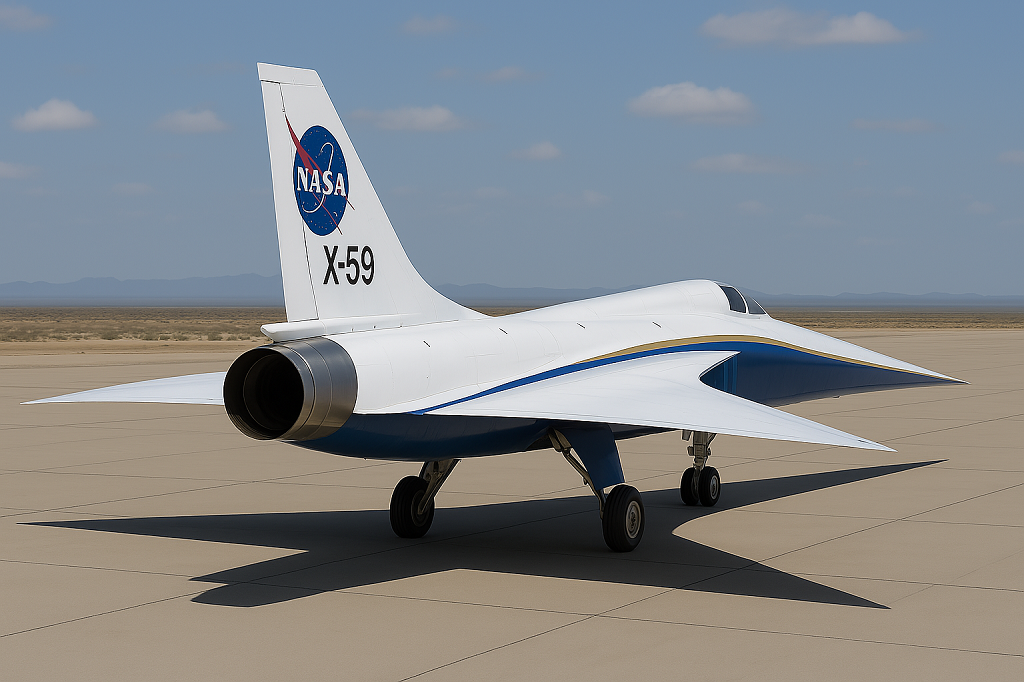
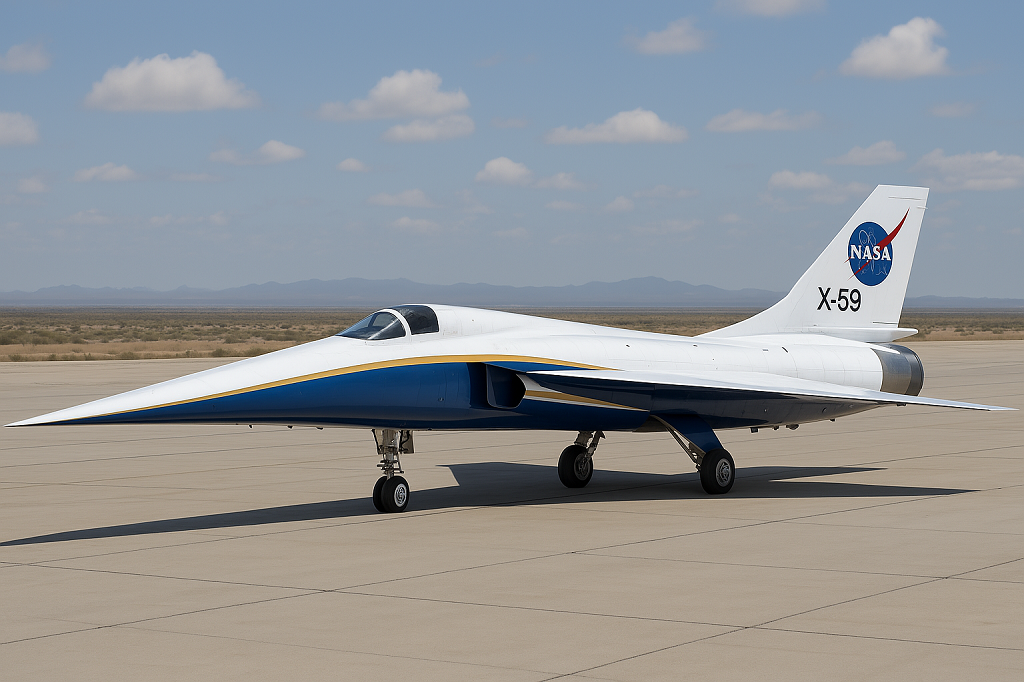
The X-59 is a marvel of aeronautical engineering, built to fly at Mach 1.42 (approximately 1,510 km/h or 937 mph) at 55,000 feet. Its key features include:
- Length and Structure: At 99.7 feet long with a 29.5-foot wingspan, the X-59’s slender, tapered nose—nearly a third of its length—reduces shock waves to minimize sonic booms.
- Engine: Powered by a General Electric F414-GE-100 engine, delivering 22,000 pounds of thrust for efficient supersonic performance.
- Vision System: Lacking a forward-facing window, the X-59 uses an eXternal Vision System (XVS) with a 4K camera and cockpit display, ensuring pilot visibility while maintaining aerodynamic efficiency.
- Noise Reduction: The jet produces a noise level of approximately 75 perceived decibels (EPNdB), comparable to the sound of a car door closing, rather than the thunderous booms of traditional supersonic aircraft.
These features aim to make the X-59 a game-changer. By reducing sonic booms to a gentle “thump,” NASA aims to pave the way for new regulations that allow supersonic flights over land.
Recent Tests in 2025
In 2025, the X-59 underwent critical ground tests to prepare for its first flight, expected later in the year. Key milestones include:
- Low-Speed Taxi Tests (July 10, 2025): NASA test pilot Nils Larson maneuvered the X-59 across a runway at Lockheed Martin’s Skunk Works facility in Palmdale, California, to verify steering and braking systems. These tests mark the final ground evaluations before high-speed taxi tests, which will bring the jet close to takeoff speed.
- Supersonic Wind Tunnel Test (July 2025): NASA collaborated with the Japan Aerospace Exploration Agency (JAXA) to test a scale model of the X-59 in a supersonic wind tunnel, measuring noise levels to confirm its quiet performance.
- Electromagnetic Interference (EMI) Testing (February 2025): Conducted at Skunk Works, this ensured the jet’s systems function without interference, a critical step for flight safety.
- Engine Tests (January and May 2025): NASA ran the X-59’s engine in afterburner mode and simulated flight conditions, including failure scenarios, to ensure reliability.
These tests reflect NASA’s rigorous approach to ensuring the X-59 is ready for its historic first flight, which will test its ability to achieve quiet supersonic flight.
The Quesst Mission: Redefining Supersonic Travel
The X-59 is the cornerstone of NASA’s Quesst mission, which seeks to gather data to enable commercial supersonic flights over land. Since 1973, the U.S. has banned civilian supersonic flights due to sonic boom noise. The X-59 aims to change this by demonstrating that its “sonic thump” is acceptable to communities. NASA plans to fly the jet over U.S. cities, collecting public feedback on its noise and sharing data with the FAA and international regulators. This could lead to new noise-based regulations by 2028, allowing flights like New York to London in under four hours or New York to Los Angeles in about 2.5 hours.
Implications for Aviation and Society
The X-59’s success could transform air travel by:
- Reducing Travel Times: Supersonic flights could halve transcontinental and transatlantic travel times, boosting efficiency for passengers and airlines.
- Opening New Markets: As noted by NASA’s Bob Pearce, the X-59 could create new commercial opportunities for U.S. companies, enhancing global connectivity.
- Advancing Technology: The X-59’s innovations, like its XVS and noise-reducing design, could influence future aircraft, improving safety and efficiency.
- Environmental Considerations: While supersonic flight raises concerns about fuel consumption and emissions, NASA’s data could inform sustainable designs, aligning with goals like net-zero aviation emissions by 2050.
However, challenges remain, including public acceptance of the “sonic thump,” high development costs, and environmental impacts. How these are addressed will determine the X-59’s long-term impact.
NASA’s X-Plane Legacy
The X-59 continues NASA’s storied X-plane tradition, which began with the Bell X-1 breaking the sound barrier in 1947. Unlike the hypersonic X-43A, which reached Mach 9.6 in 2004, the X-59 focuses on practical, commercial applications. Its emphasis on noise reduction reflects NASA’s shift toward addressing modern aviation challenges, such as regulatory barriers and public perception, while building on decades of aerodynamic research.
Conclusion
NASA’s X-59 QueSST represents a bold step toward a new era of air travel. Its 2025 tests, from taxiing to wind tunnel evaluations, bring it closer to its first flight, which could redefine supersonic travel. By producing a quiet “sonic thump,” the X-59 aims to lift the ban on overland supersonic flights, making faster travel a reality. As NASA prepares for community overflights and regulatory discussions, the X-59’s success could reshape aviation, connecting the world like never before.