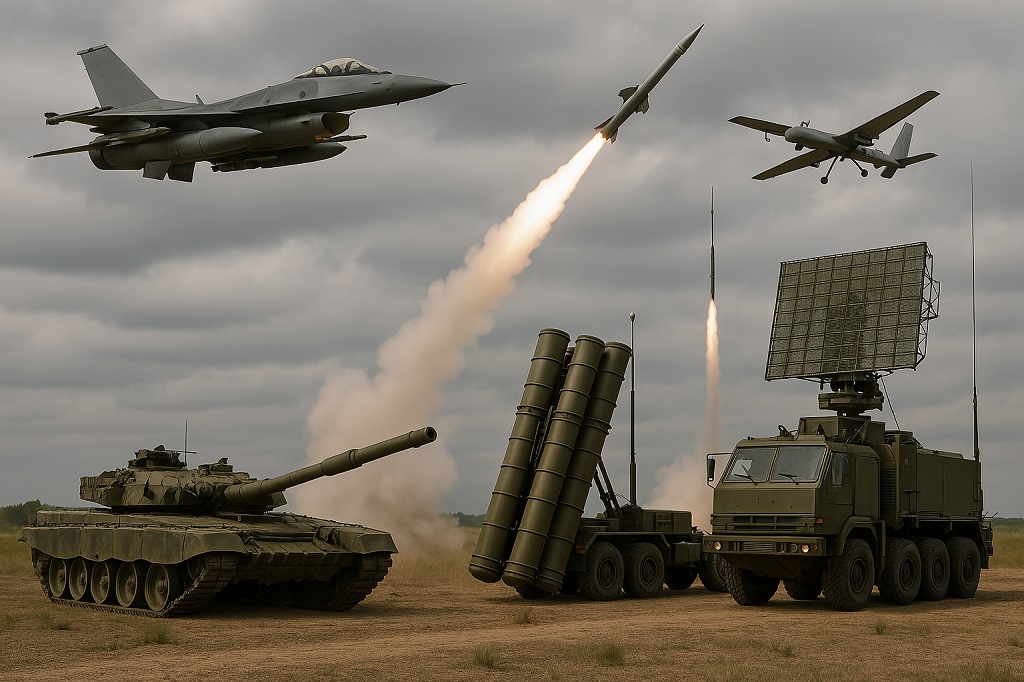
Have you ever wondered how two nations with distinct geopolitical positions, like Iran and Israel, build and maintain their military strength? In this article, we will explore their air forces, ground capabilities, and air defense systems. Based on information available as of July 26, 2025, what factors give one country an edge over the other…
Air Capabilities
How do we assess a country’s air power? Is it the sheer number of aircraft, or does their quality and technological advancement matter more? Let’s compare Iran and Israel to find out.
Iran
- Total Aircraft: 551 (331 combat-ready)
- Fighters: 188 (113 ready)
- Attack Helicopters: 13 (8 ready)
- Key Features: Iran is a notable producer of drones, such as the Shahed 136. However, its aircraft are largely outdated, consisting of pre-1979 U.S. models and Russian designs. How have sanctions affected Iran’s ability to maintain and upgrade its air fleet? Can drones serve as an effective substitute for advanced fighter jets?
Israel
- Total Aircraft: 611 (489 combat-ready)
- Fighters: 240 (192 ready), including F-35, F-16, and F-15
- Attack Helicopters: 48 (38 ready)
- Key Features: Israel leverages advanced U.S. and European technology and claims air superiority in the region. Why might access to modern aircraft like the F-35 provide a strategic edge?
Question to Ponder: If Iran emphasizes drones while Israel focuses on advanced fighters, which approach would prove more effective in a potential conflict?
Ground Military Capabilities
What defines a powerful ground force? Is it the number of troops, the quality of equipment, or perhaps international support? Let’s examine these aspects for both nations.
Iran
- Military Personnel: 960,000 (610,000 active, 350,000 reserve)
- Equipment: A combination of outdated Soviet and pre-1979 U.S. equipment, newer Russian systems, and limited domestic production
- Key Features: Iran has developed ballistic missiles (e.g., Khorramshahr and Fath) and drones, and relies heavily on proxy forces like Hezbollah and Hamas. Can this proxy strategy replace a robust conventional army?
Israel
- Military Personnel: 634,500 (169,500 active, 465,000 reserve)
- Equipment: Equipped with advanced U.S. and European technology, supported by a strong domestic defense industry
- Key Features: Significant U.S. military support and a focus on precise, intelligence-driven operations. How does this international support enhance Israel’s military strength?
Question to Ponder: Can Iran’s larger manpower neutralize Israel’s technological superiority and international backing?
Air Defense Capabilities
To what extent can air defense systems protect a nation from aerial attacks? Is a multi-layered defense system always more effective?
Iran
- Air Defense Systems: Includes Russian systems like the S-300, though many have been damaged in recent Israeli strikes
- Status: Relies on weakened proxy forces like Hamas and Hezbollah. Have these losses made Iran more vulnerable to aerial attacks?
Israel
- Air Defense Systems: Includes Iron Dome (short-range, over 90% success rate), Arrow-3 (long-range), David’s Sling (mid-range), Iron Beam (laser-based), and Patriot
- Status: Supported by the U.S., these systems have proven effective against Iranian missile attacks, though not entirely foolproof. What factors contribute to the success of these systems?
Question to Ponder: With Iran’s air defenses compromised, how can it counter advanced aerial assaults?
Conclusion
Based on the information provided, Israel holds an advantage in technology and equipment quality, particularly in air and defense capabilities. Iran, in contrast, has strengths in manpower and the production of ballistic missiles and drones. But which of these factors would be decisive in an actual conflict? Does advanced technology always prevail over numerical superiority? Or could Iran’s asymmetric strategies shift the balance? These questions invite you to reflect deeply on the complexities of military power.
