
In a historic leap for interplanetary exploration, NASA’s MOXIE Experiment Mars Oxygen Production has concluded with groundbreaking success aboard the Perseverance rover. This pioneering mission demonstrated the viability of converting Mars’ carbon dioxide-rich atmosphere into breathable oxygen—a critical step toward sustainable human exploration of the Red Planet.
What Was MOXIE?
MOXIE, a toaster-sized instrument aboard Perseverance, was designed to convert Martian atmospheric CO₂ into breathable oxygen through a process called electrolysis. By splitting carbon dioxide molecules (CO₂) into oxygen (O₂) and carbon monoxide (CO), the experiment aimed to demonstrate technology that could one day supply astronauts with air to breathe and rocket propellant for return trips to Earth.
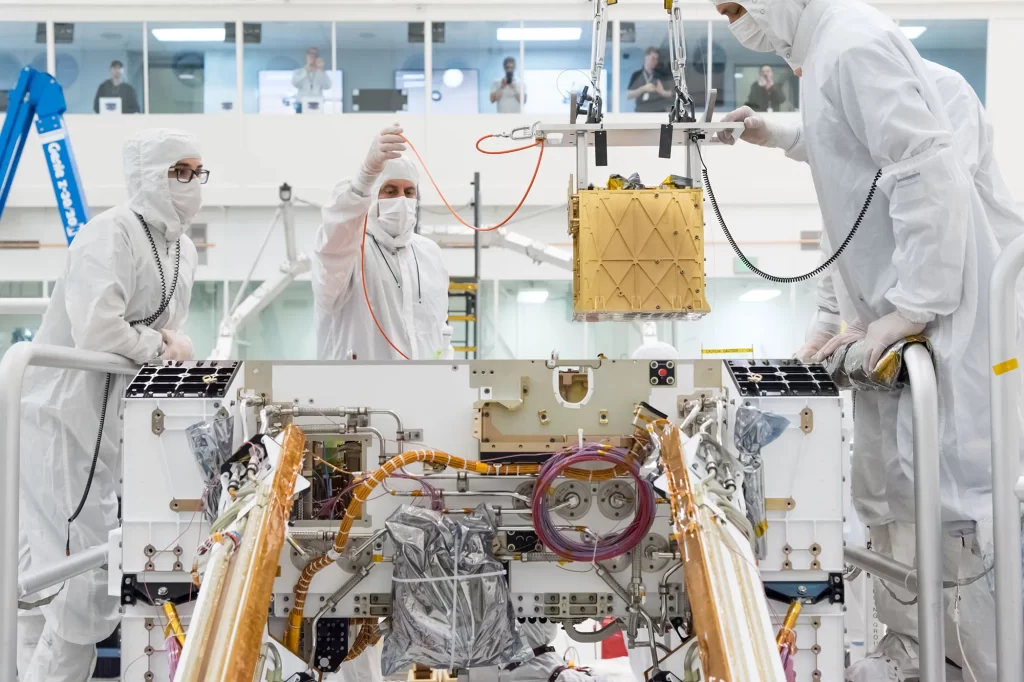
Key specifications:
- Production Capacity: Generated 6–10 grams of oxygen per hour.
- Total Output: 122 grams over 16 experimental runs—enough to sustain an astronaut for about 4 hours.
- Efficiency: Achieved 98% purity in oxygen output, exceeding NASA’s initial goals.
Why MOXIE’s Success Matters
Mars’ atmosphere is 96% carbon dioxide, making it inhospitable to humans but ideal for oxygen harvesting. MOXIE’s success validates in-situ resource utilization (ISRU), a strategy critical for reducing the cost and risk of human missions. Transporting oxygen from Earth to Mars would require massive payloads; producing it locally could save billions and enable long-term habitation.
Dr. Michael Hecht, MOXIE’s principal investigator at MIT, hailed the experiment as “the first demonstration of truly using resources on another planetary body and transforming them into something useful for human exploration.”
Overcoming Martian Challenges
Operating on Mars posed unique hurdles:
- Extreme Temperatures: MOXIE endured fluctuations from -80°C to 800°C during oxygen production cycles.
- Dust Storms: Martian dust threatened instrument functionality, but MOXIE’s robust design prevailed.
- Thin Atmosphere: Mars’ air density is just 1% of Earth’s, requiring MOXIE to compress CO₂ efficiently.
Despite these challenges, the experiment demonstrated remarkable reliability, conducting runs across Martian seasons and times of day to test varying conditions.
The Road Ahead: Scaling Up for Human Missions
With MOXIE’s proof of concept complete, NASA is now developing a scaled-up system dubbed “MOXIE 2.0” capable of producing oxygen at rates 100–200 times higher. Such a system could generate the roughly 25 metric tons of oxygen needed to fuel a rocket for a crewed return trip from Mars.
Jeffrey Sheehy, NASA’s Space Technology Mission Directorate chief engineer, stated, “The next step is to integrate this technology into mission architectures for the 2030s, ensuring astronauts can ‘live off the land’ from day one.”
Broader Implications for Mars Exploration
- Artemis Program Synergy: Lessons from MOXIE could inform lunar ISRU efforts, such as extracting oxygen from Moon regolith.
- Mars Sample Return Mission: Reliable oxygen production supports the infrastructure needed to retrieve Perseverance’s samples.
- Colonization: Sustainable oxygen supplies are vital for habitats, greenhouses, and fuel depots in a future Martian colony.
Global Reactions and Collaborations
The success has sparked international interest. ESA and China’s CNSA are now accelerating their own ISRU research, while private companies like SpaceX view MOXIE’s results as complementary to Starship’s goal of establishing a Mars settlement.
Conclusion: Oxygen—The First Step to Making Mars Home
MOXIE’s conclusion is not an endpoint but a beginning. By transforming Martian air into a vital resource, NASA has unlocked a cornerstone of interplanetary survival. As Perseverance continues its hunt for ancient microbial life, MOXIE’s legacy will endure as the experiment that proved humans can thrive on Mars, not just visit.
“This is the kind of technology that turns science fiction into science fact,” said NASA Administrator Bill Nelson. “We’re not just exploring Mars; we’re learning how to inhabit it.”
